
For more than 25 years we've worked with a great set of landowners and partners to bring white-clawed crayfish back from the brink of extinction. Our collective knowledge and expertise will be helpful as we play a lead role in this new joined-up effort. The Trust will be the main point of contact for the whole of the Midlands, providing advice, guidance and support to project partners.Staffordshire Wildlife Trust
Rare white-clawed crayfish thrown a lifeline by ambitious national recovery programme
Staffordshire Wildlife Trust has a pivotal role in a new programme to restore England’s rare, white-clawed crayfish.
The Wildlife Trusts are leading the largest coordinated recovery effort ever undertaken for the species. The programme unites around 40 partner organisations. It brings together conservation organisations, researchers and environmental agencies. The aim is simple - to reverse the dramatic loss of the UK's only native freshwater crayfish.
Threats to the species include the deterioration of habitat and increased pollution. The spread of invasive non-native American signal crayfish has also destroyed native crayfish populations. The signal crayfish carry and spread crayfish plague, which is fatal to white-claws. White-claws are key river ecosystem engineers, recycling dead matter and improving water quality. They also play an important role in river ecosystems as a food source for otter, heron and eel, while young crayfish provide food for brown trout and salmon.
Dedicated conservation efforts are helping to safeguard populations in Staffordshire and neighbouring areas. However, a coordinated national response is needed to recover their population at scale. This programme is supported by funding from Natural England’s Species Recovery Programme and matched by substantial contributions from project partners. The initiative will scale up nature recovery efforts for the benefit of white-clawed crayfish and river systems alike.
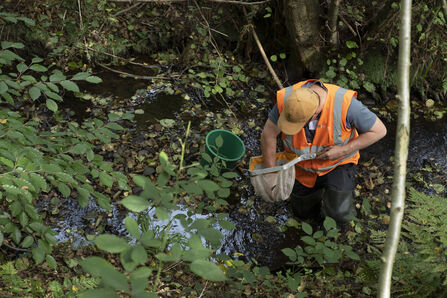
Nick Mott relocating white-clawed crayfish in Staffordshire
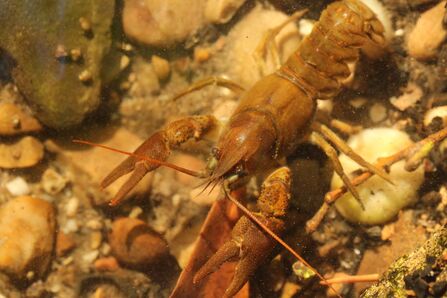
White-clawed crayfish by Nick Mott
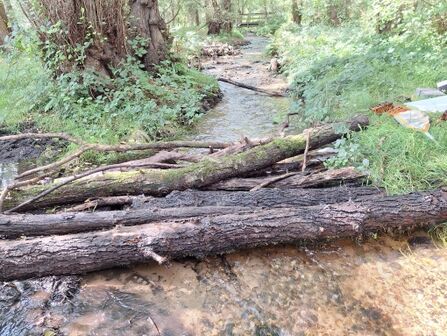
Crayfish reefs in a brook by Nick Mott
Nick Mott, Species Recovery Manager at Staffordshire Wildlife Trust, said:
"This is an exciting step in securing a future for white-clawed crayfish,
"For more than 25 years we've worked with a great set of landowners and partners to bring them back from the brink of extinction. Our collective knowledge and expertise will be helpful as we play a lead role in this new joined-up effort. The Trust will be the main point of contact for the whole of the Midlands, providing advice, guidance and support to project partners."
Over the next three years, partners will monitor surviving populations and assess threats and opportunities. This will allow prioritisation of action where it can have the greatest impact. This includes the breeding, rearing and release of juveniles. An exciting new mapping tool will identify safe havens where white-clawed crayfish can be protected from invasive species and disease.
This work will support the restoration of populations across the areas where they used to be found. It will also invest in studies into crayfish genetics, disease resistance and pathogens. Genetic material will be frozen to provide a backstop in the event of a population crash. Not only will this strengthen the long-term health and resilience of the crayfish, but it will also provide an important evidence base for future conservation efforts.
In Staffordshire work will include:
- Establishing new ark sites - safe havens for white-clawed crayfish, free from the threat of American signal crayfish.
- Habitat work - adding wood and stone to streams and lakes to create crayfish reefs. Plus adding brushwood bundles into margins (stream banks). Both will provide crayfish with cover so they can feed and breed safely.
- Creating hatcheries - so young crayfish can be safely raised. These facilities will also be used to keep crayfish in quarantine before relocation. This will make sure they're disease free before they’re released in new areas - critical to establishing healthy new populations.
Stan Smith, Head of Nature and Species Recovery at The Wildlife Trusts, says:
“This programme represents a significant milestone for white-clawed crayfish conservation. For the first time we have the opportunity to coordinate action at a national scale. Through targeted nature recovery efforts, breeding and reintroduction, and innovative research, we can give this iconic native species a lifeline. Together we’re giving white-clawed crayfish the best possible chance to thrive once more.”
The programme hopes to establish the long-term foundations needed to prevent further loss of this species. It also aims to return white-clawed crayfish to more of the rivers and streams where they once thrived.
In addition to the benefits for white-clawed crayfish, the programme also contributes to wider nature recovery goals and supports healthier river ecosystems. It delivers against national biodiversity ambitions, including Local Nature Recovery Strategies, the Government’s Environmental Improvement Plan and the White-clawed Crayfish Species Recovery Action Plan.
Media notes
- The white-clawed crayfish (Austropotamobius pallipes) is the UK's only native freshwater crayfish species.
More about this programme:
- The programme will run until March 2029 and is supported by £1.5 million from Natural England's Species Recovery Programme, alongside match funding and in-kind contributions from project partners. Total programme investment is valued at more than £2.2 million.
- Around 40 organisations are involved in delivery across England; The Wildlife Trusts will oversee national programme coordination, governance and reporting, while regional partners - including Wildlife Trusts in Yorkshire, Derbyshire, Warwickshire, Staffordshire, Gloucestershire, Sheffield and Rotherham, Hampshire and Isle of Wight, and Birmingham and Black Country - will lead delivery on the ground.
- Bristol Zoological Society will provide technical leadership and specialist expertise, supported by Natural England, the Environment Agency and academic institutions across the country.
Over the past 25 years Staffordshire Wildlife Trust's work to conserve white-clawed crayfish has included:
- Setting up partnership projects to carry out crayfish conservation work across the region.
- Created over 20 ark sites to establish new populations of crayfish.
- Translocated over 10,000 white-clawed crayfish to the ark sites.
- Carried out over 10km of habitat enhancement work along streams and lake shorelines.
- Promoted check, clean, dry (boots and equipment) to prevent the spread of disease which is a significant threat to white-clawed crayfish.