
Hem Heath Woods offers a green oasis in an urban area and is loved by many. Some locals have walked here for their whole lives and have a real affinity with it. We want it to provide the same joy for others over the next 20 plus years, which makes projects like this vital.Staffordshire Wildlife Trust
Restored and revived: Hem Heath Woods given boost
This popular Stoke-on-Trent woodland has been made better for people and nature by Staffordshire Wildlife Trust over the past year.
Visitors to Hem Heath, near Barlaston, can now enjoy 2,500m of surfaced pathways, creating a more accessible woodland and making muddy winter walks a thing of the past. They can also enjoy resting on one of ten new benches while absorbing the peaceful melody of birdsong.
New information boards let visitors discover what wildlife they might see during their visit according to the season, and they can choose from three new colour-coded waymarked walking routes which meander through the woodland.
The Trust’s volunteers have been instrumental in delivering the project. They’ve spent time harvesting native bluebell seeds and spreading them to expand the flower’s coverage. While it will take several years for the new bluebells to establish, this long-term investment will ensure the woodland continues to flourish for future generations.
Not only has the Trust improved the woodland for people, but it’s also been boosted for nature too. Volunteers have dedicated hours to planting 2,100 young hazel, oak, hawthorn, wild cherry, crab apple and silver birch trees. As they grow, they’ll create woodland for the future and fill the gaps left due to the loss of trees to ash dieback. The woodland was originally a plantation, which meant the trees were all of a similar age and size. Healthy woodlands need trees of a variety of ages to be resilient and provide biodiversity for birds, insects, and mammals.

People enjoying one of the newly surfaced footpaths through Hem Heath Woods
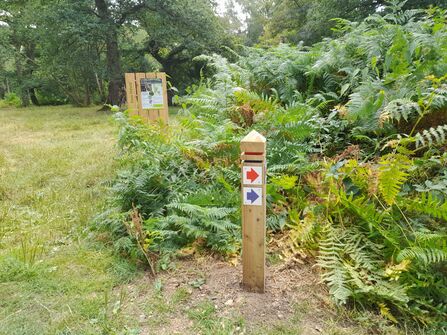
New waymarkers and information signs have been installed at Hem Heath Woods
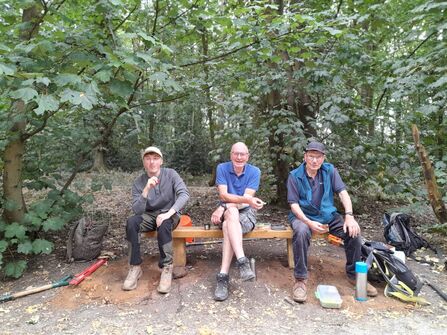
Volunteers enjoying a newly installed bench at Hem Heath Woods

Bluebells at Hem Heath Woods in spring by Sarah Davison
Reserves Officer Sheryl Hayes led the project and says:
“Hem Heath Woods offers a green oasis in an urban area and is loved by many. Some locals have walked here for their whole lives and have a real affinity with it. We want it to provide the same joy for others over the next 20 plus years, which makes projects like this vital.
“Sadly, we lost a lot of trees here due to ash dieback disease. The new trees will fill in some of the gaps left but we’ve also left some space for natural regeneration. In some areas more light reaching the woodland floor is helpful so that other plants get the chance to grow. This is good for our insect populations, which in turn is good for the birdlife here – we've already seen positive signs of increased bird activity and nesting.”
Andrew Brown, Executive Director at Veolia Environmental Trust, says:
"Everyone at Veolia Environmental Trust is incredibly proud to have helped support the restoration of Hem Heath Woods. The addition of new accessible pathways as well as widespread bluebell and tree planting, means the woodland can continue to be both a thriving ecosystem and an escape for locals to enjoy for years to come.
"We look forward to seeing how these impactful investments in Hem Heath Woods help preserve the area's environmental security and encourage biodiversity for residents to enjoy."
The work was completed thanks to £126,988 of funding from the Veolia Environmental Trust through the Landfill Communities Fund.
Improvements don’t end here either. The funding has also enabled the Trust to run a programme of events in the woodland during school holidays, enabling local families to spend quality time together enjoying nature.
The project has also funded two new ponds and improvements to six other ponds in areas adjacent to the woodland and improvement to grazing facilities to make the grassland better for wildlife such as great crested newts.
Staffordshire Wildlife Trust has been awarded £18,856 of funding from Stoke-on-Trent City Council’s Pride of Place to upgrade the car park. The money will convert the car park surface from the current loose chippings to tarmac. This work is due to take place in autumn, so that it is completed in time to make visits during the wetter winter months easier.