

Water vole ©Terry Whittaker/2020VISION
Water Vole Recovery Project
Nature's tireless wetland champions
Found along our waterways, the water vole has chestnut-brown fur, a blunt, rounded nose, small ears, and a furry tail. It is much bigger than other vole species.
When water voles dig burrows they move nutrients around, helping plants to grow; by grazing on plants, they help encourage greater diversity in the riverbank vegetation; and these actions create benefits for insects like butterflies and bees, birds and other small mammals.
To survive, a water vole must eat the equivalent of 80% of its body weight in vegetation every day – no wonder they are such effective riverbank ‘gardeners’!
In Staffordshire, we have a small population of water voles just clinging on at Cecilly Brook Nature Reserve, which is managed by SWT. It's important we do everything we can to help their recovery.
No small mammal does more than water voles to create opportunities for other riverbank wildlife.Staffordshire Wildlife Trust
How we're helping bring them back
Reinstating natural processes
A wild, diverse, healthy river ecosystem will involve many different species working alongside each other to keep natural processes moving. Beavers and water voles are two species that have evolved together, engineering their environment to create better living conditions for themselves, which also creates niches for other wildlife. For instance, when beavers coppice trees along the watercourse they let more light in, promoting greater diversity in ground plants - food for water voles. The dams beavers make also help sustain wetlands, increasing the range of habitat. In turn, the convoluted burrow systems that water voles create provides habitat for reptiles, amphibians, birds and other mammals, and by grazing a broad mix of vegetation water voles ensure the riverbank is constantly changing.
Helping restore habitats
We will manage riverbanks to encourage greater biodiversity, including creating new reed beds beside slow-moving water, habitats where water voles and many other species will thrive. By slowing the flow of water we can re-wet dry areas, offering water voles a greater range of linked habitats. And we can create refuges where water voles can seek safety during flood conditions.
We will also control trees and scrub. By removing selected trees and scrub we will allow more light to reach the riverbanks and wetland ground – this encourages wildlife diversity, which helps water voles find more food sources and more suitable habitats.
Mink control
It is widely acknowledged that the American mink is the key driver behind the more recent decline of our water voles. Mink were introduced to the UK in the early 1900s for fur farming. When farms closed in the 1960s, mink escaped or were intentionally freed.
Unfortunately, American mink have no effective natural predators in the UK and have been decimating populations of several native species for many years, especially water voles. Many of these native species have no natural defences against mink since they were introduced so recently and suddenly. As a result, water voles are predated at an unnaturally high rate and are at risk from extinction. Male American mink can eat two water voles a day, and the females can easily fit into water vole burrows where they can decimate entire litters of young.
Since 2023 we've worked with Derbyshire Wildlife Trust on a coordinated programme of mink control throughout the River Dove catchment, working with partner organisations, landowners and local volunteers to monitor and trap mink.
By March 2025, 500km of river was covered by traps, and as of March 2026, 230 mink have been removed from the catchment. We have already received anecdotal reports of more fish and water birds, with more chicks seen during 2025 than in previous years. While not proven to be linked to the reduction in mink numbers, it is encouraging news nevertheless! In the future we hope to expand trapping to neighbouring catchments - otherwise, we face the risk of mink from neighbouring catchments moving across and recolonising in the Dove catchment.
Hopefully we'll soon see the network of mink traps spreading further to ‘join up’ the river catchments protected by traps. Only when everywhere is trapped can we truly say we have removed the threat to our precious native wildlife.
The national picture
Our Dove Catchment work is part of a much wider effort to help water voles recover, with many mink traps on waterways around the country. Efforts began in the east of the UK back in 2020.
In January 2024 the Waterlife Recovery Trust (WRT) made a startling announcement: the breeding population of mink in East Anglia had been eradicated. This was the culmination of an intensive trapping programme spanning four years: a professionally co-ordinated effort to clear the maze of waterways of the invasive species.
The WRT expanded its operations into areas of Kent and East Sussex. Next they moved into the Thames to Lincolnshire region, encompassing a huge area. Rivers in Hertfordshire, Bedfordshire, east Northamptonshire and Rutland were covered by traps.
Following this success, the WRT team expanded their working areas. Now mink control is much more widespread, with many organisations joining the fight to bring back water voles.

This map shows the location of mink traps deployed in England and registered with the Waterlife Recovery Trust. The blue box denotes the Dove catchment project traps. Source: Waterlife Recovery Trust
Send us your sightings
Have you seen a water vole or a mink in the River Dove, Tean, Manifold, Hamps or Churnet? We're also keen to know if any are seen in any of the waterways which are connected to these rivers - the local brooks which spur off these rivers.
If you are lucky enough to see or photograph a water vole please recording your sightings via the iRecord app or via their website.
It's equally important that mink sightings are reported to the Waterlife Recovery Trust, so please submit those too.
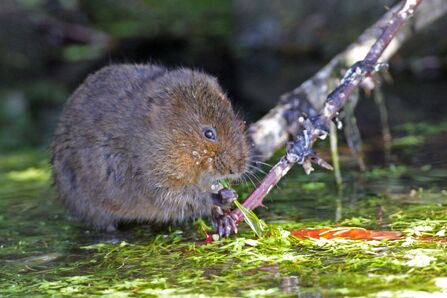
©Margaret Holland
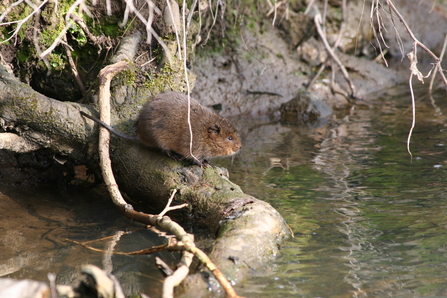
Water vole -Nick Mott
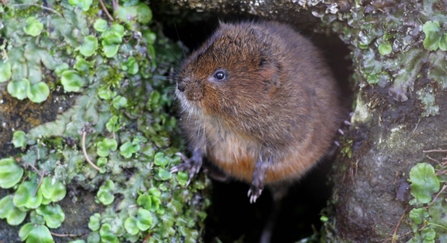
A water vole by Margaret Holland
FAQs
Why is the project needed?
The evidence is stark and clear, without urgent action, the future for water voles in our county is bleak and we risk losing this much-loved species forever from Staffordshire. The urgency of the situation is highlighted by the water vole's inclusion as a priority species in the UK Biodiversity Action Plan.
What area does the project cover?
The River Dove catchment was chosen for our water vole recovery programme, which aims to save our humble water vole from extinction.
Why is mink control part of the project?
The future of the county’s water vole population is so perilous that in addition to creating new habitat and improving existing wetland habitat it is essential that we prevent further loss of water voles due to mink predation. Mink were introduced or escaped into our landscape in the 1950s and 1960s. Water vole numbers have been devastated by mink which are voracious predators which will kill a wide range of native creatures. Efforts to reduce mink numbers are vital to save water voles from extinction and will also benefit a range of other species. Without directly reducing mink numbers efforts to improve or create suitable habitat would be futile.
How can you justify killing mink?
Staffordshire Wildlife Trust believe that culling should always be seen as a last resort and be underpinned by science. Sometimes we need to be willing to make difficult decisions to protect threatened species. Water voles are our most threatened native mammal, on the verge of extinction here in Staffordshire and across much of the UK. As the local Wildlife Trust we have a duty to act to protect and restore native species. We are working to promote a wide abundance of wildlife and if one species becomes overly dominant then we are not achieving that. Sadly, non-native mink have no effective natural predators and have been decimating populations of a number of species for many years, especially water voles, and we are committed to bringing water voles back from the brink. We follow best practice and evidence from a range of successful projects around the country.
What other wildlife will benefit?
As well as halting the decline of water voles, this project will benefit other threatened species including bittern, sedge warbler, harvest mouse, otter, pipistrelle and common tern.
